Porsche Carrera GT: Porsche's Lone V10
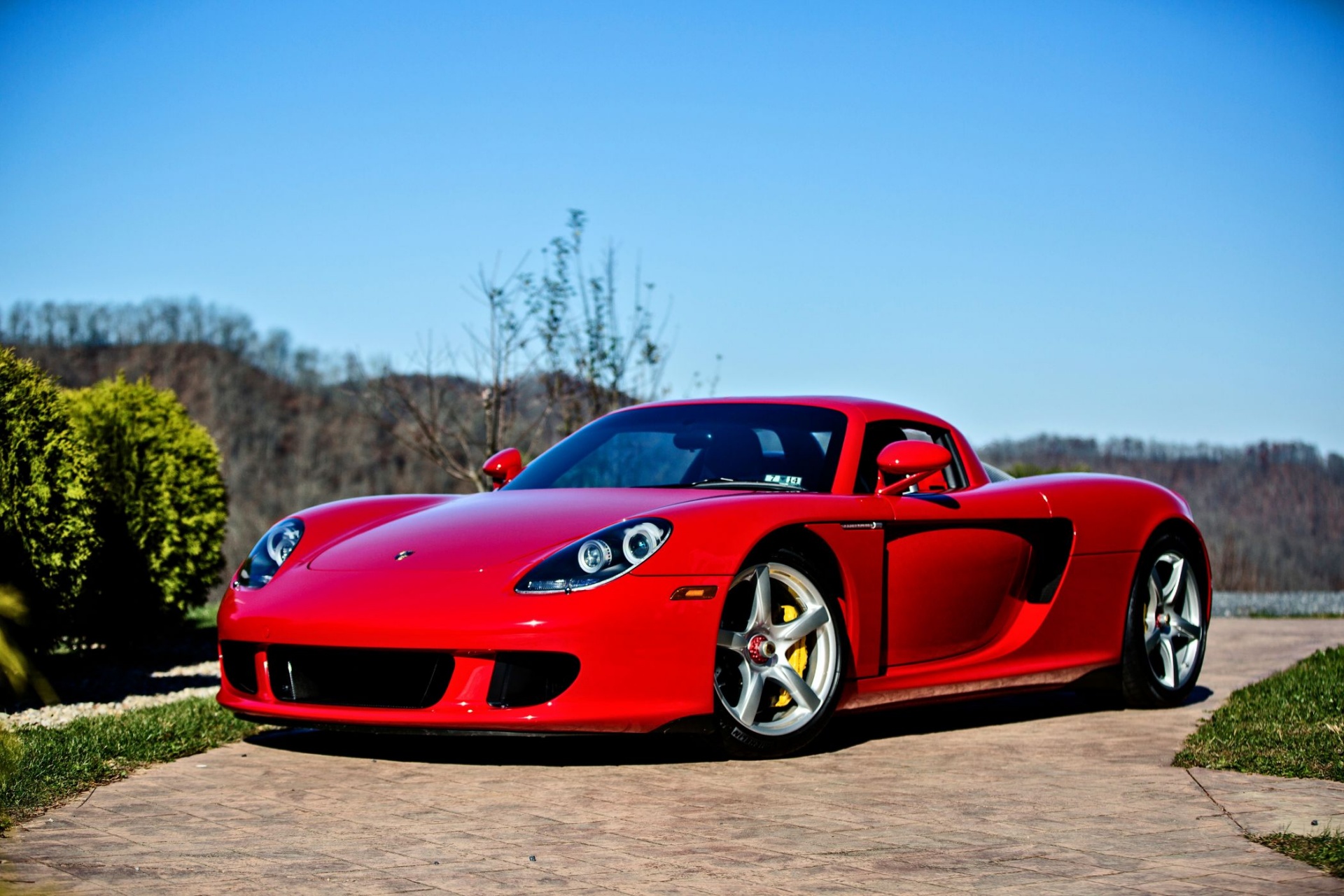
The Porsche Carrera GT is one of those cars that feels like it should come with a permission slip. Not because it’s the fastest thing ever built, but because it’s so honest—a mid-engine V10, a manual gearbox, and barely any filters between your right foot and your future. It’s the early-2000s supercar era distilled into one carbon-fiber bottle: light, loud, and slightly intimidating.
For DailyCarQuiz people, the Carrera GT is basically a cheat code: it has a handful of signature details that are instantly recognizable once you know them. And the sound? That’s the kind of noise you can identify with your eyes closed… even if your brain is yelling, “that’s a lot of car.”
Why it’s instantly identifiable: the “clean” supercar that looks like it’s moving while parked
Most halo cars shout. The Carrera GT does something cooler: it looks tidy until you notice how extreme it is. The front end sits low like a skimming stone, the body is stretched and planted, and the whole car has that classic Porsche vibe of “precision first, drama second.” Then you catch the details and realize it’s absolutely not subtle.
- Low, smooth nose with wide intakes that look carved rather than slapped on.
- Mid-engine proportions: cabin forward, long rear deck, and that “pivot point” feeling behind your shoulders.
- Two tall rear “humps” behind the seats (speedster-style buttresses) that visually frame the engine area.
- High-mounted center exhaust—two pipes up top, like the car is wearing a jetpack.

The signature sound: a V10 that doesn’t rumble— it howls
If the Dodge Viper’s V10 is a low-rev baritone, the Carrera GT is a full-on tenor with a track-day coffee addiction. It’s naturally aspirated (no turbos), so there’s no boost whoosh—just immediate airflow, crisp throttle response, and a rising wail that gets sharper and more metallic as the revs climb. It sounds like it’s pulling a tight rubber band until it snaps into a scream.
A big part of that character comes from the engine’s motorsport DNA. The Carrera GT’s V10 story traces back to Porsche’s racing ambitions, and you can hear that in the way it builds power: it isn’t trying to feel effortless. It feels urgent. The note starts clean and mechanical, then stacks harmonics as it climbs—like a choir of angry precision tools.
Some supercars sound impressive. The Carrera GT sounds like it’s arguing with physics—and winning.
Here’s the one technical term worth knowing: ITBs (individual throttle bodies). That means each cylinder effectively gets its own throttle path, which helps the engine respond instantly and adds a crisp, snappy edge to the intake sound. Translation: when you breathe on the throttle, the car answers like you rang a bell.

Two pieces of trivia that make the Carrera GT feel like a legend
1) The wooden shift knob is not a joke
Yes, it really has a wooden gear knob (and often a matching wooden handbrake handle). On a carbon-tub supercar with a V10, it’s hilariously analog—and that’s the point. It’s the kind of detail that tells you Porsche wanted this car to feel like a machine, not an appliance. If you ever see an interior shot and think, “why is there a piece of furniture in here?”—congrats, you’ve spotted a Carrera GT clue.
2) It became an icon in games and car culture for a reason
The Carrera GT hit right in the sweet spot: early-2000s supercar poster era, peak racing-game obsession, and a spec sheet that sounded like sci-fi back then. It’s been a staple “dream garage” pick in car communities for years—partly because it’s stunning, and partly because it has a reputation for demanding respect. There’s also a well-known, tragic real-world crash tied to the model that cemented its mythos and sparked a lot of discussion about how unforgiving high-performance cars can be. (No gory details—just a reminder that the legend has sharp edges.)
Spotter’s guide: how to recognize a Carrera GT fast
- From a distance: low, sleek Porsche profile, but with a noticeably longer rear deck and wider hips than a 911.
- From the rear: the high-mounted center-exit exhaust is the giveaway—pipes up top, not tucked down low.
- Behind the seats: two tall speedster-style buttresses (the “humps”) that frame the rear bodywork.
- At night: the stance and rear silhouette are distinctive—wide, low, and clean with a “prototype” vibe.
- By sound: a sharp, rising naturally aspirated V10 howl—more race-car scream than muscle-car rumble.
- Interior clue: that wooden shift knob is the weirdly perfect tell.

The Carrera GT is a perfect “one-clue” car. Hear a naturally aspirated V10 screaming its lungs out? See center-exit pipes perched high like a jet nozzle? Catch a wooden shifter in a carbon supercar? That’s the kind of trivia that turns a wild guess into an instant lock-in.
So next time you’re playing Cardle, keep a mental sticky note for the Carrera GT: center-exit exhaust up top, speedster humps, and a V10 that sounds like a race engine wearing a license plate. If you can recognize it once, you’ll never un-hear it.