Some cars are recognizable by badge. The Pagani Zonda is recognizable by vibes—a carbon-fiber sculpture with a rear end that looks like a jet afterburner and a sound that makes people stop mid-sentence. Even if you’ve never memorized the model names, you’ve seen the shape: the cab-forward stance, the dramatic roof scoop, the four little taillights, and that unmistakable quad-cluster exhaust sitting dead-center like a warning label. It’s the kind of supercar that doesn’t need an introduction… it introduces itself.
Why the Zonda Is Instantly Identifiable
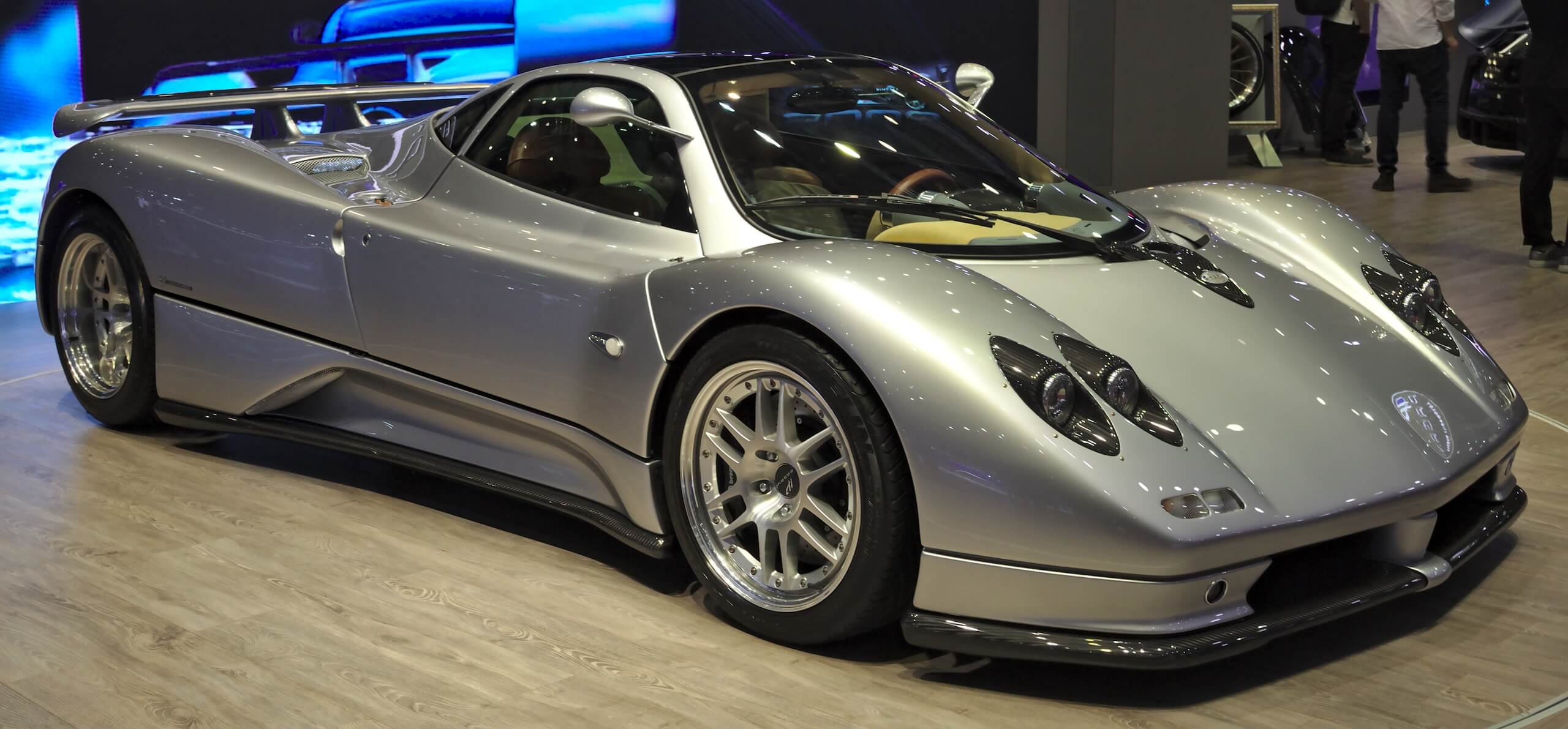
The Zonda has that rare supercar talent: it’s exotic and immediately readable. The proportions scream “mid-engine,” but the details scream “Pagani.” The body looks shrink-wrapped over the mechanical bits—like you can sense the chassis tensioning underneath. Up front, the headlights have that slightly wide-eyed, jewel-like look, while the greenhouse sits forward in a way that makes the car feel fast even when parked. And then there’s the rear: a compact tail with four round taillights and that famous exhaust layout that’s so unique it basically functions as a logo.
The Quad-Cluster Exhaust: Zonda’s Signature Stamp
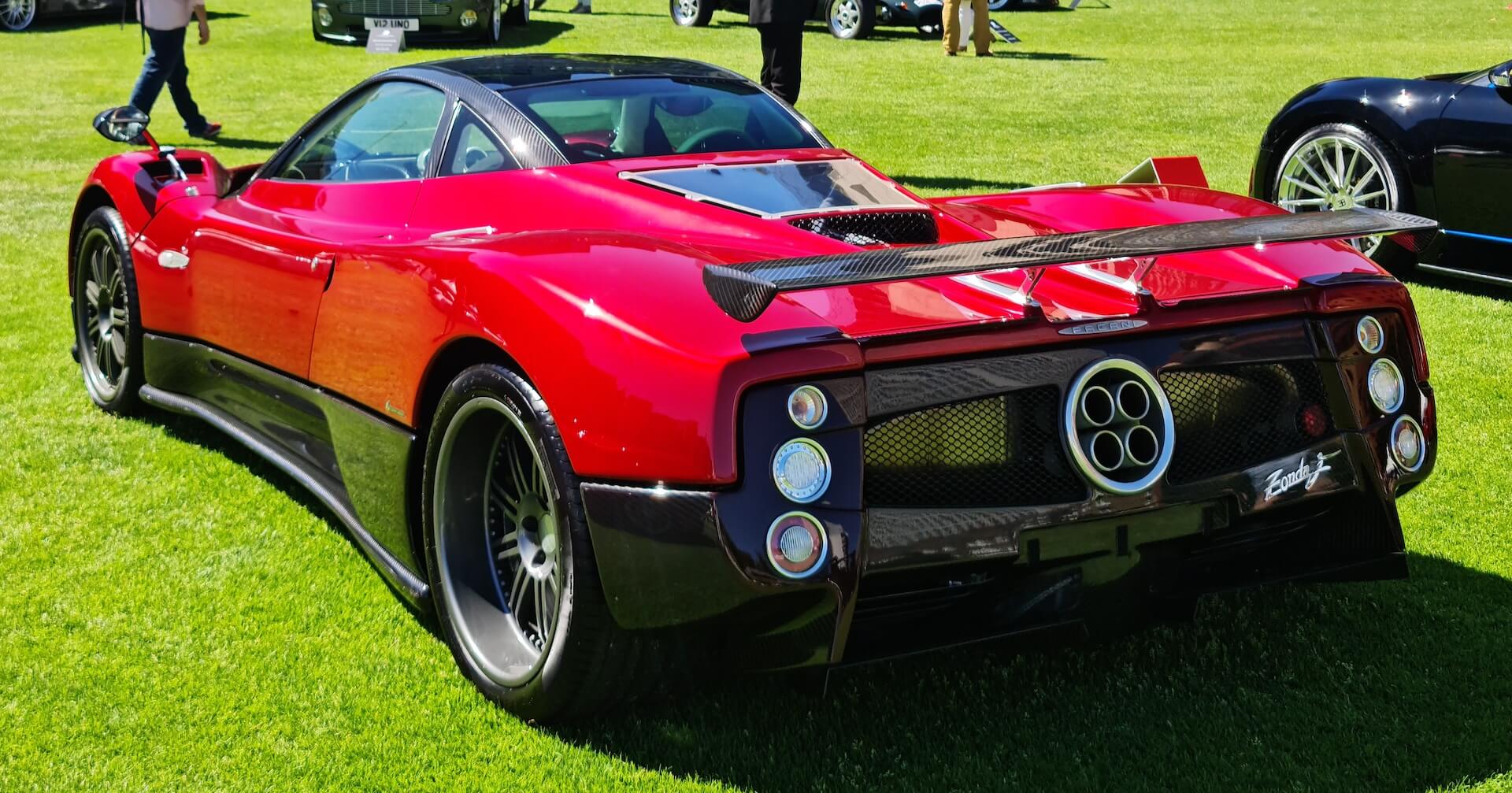
Lots of cars have four exhaust tips. The Zonda has the four exhaust tips: a tight square in the middle, perched high like a piece of industrial art. It’s not just styling either—it’s part of the Zonda’s whole personality. When it’s idling, that central cluster looks like it’s waiting to breathe fire. When it’s on throttle, it’s the focal point of the entire car, like the back end is a stage and the V12 is the lead singer.
- Cab-forward silhouette with a short nose and dramatic canopy.
- Roof scoop (on many versions) that gives “track weapon” energy even on road cars.
- Exposed carbon fiber and visible weave that feels more aerospace than automotive.
- Four round taillights lined up like jewelry across the rear.
- Center-mounted quad exhaust arranged in a square—almost no other car does this so boldly.
- Big rear wing or aero elements that look functional, not decorative.
The AMG-Derived V12 Howl
The Zonda’s sound is half the legend. Under the rear glass lives a Mercedes-AMG–derived V12—originally rooted in Mercedes’ big-displacement V12 family and then evolved by AMG for Pagani over the years. Depending on the variant, you’ll hear different displacements, but the vibe stays consistent: a huge naturally aspirated (no turbo) V12 that revs with surprising eagerness for something that sounds like it could power a small lighthouse.
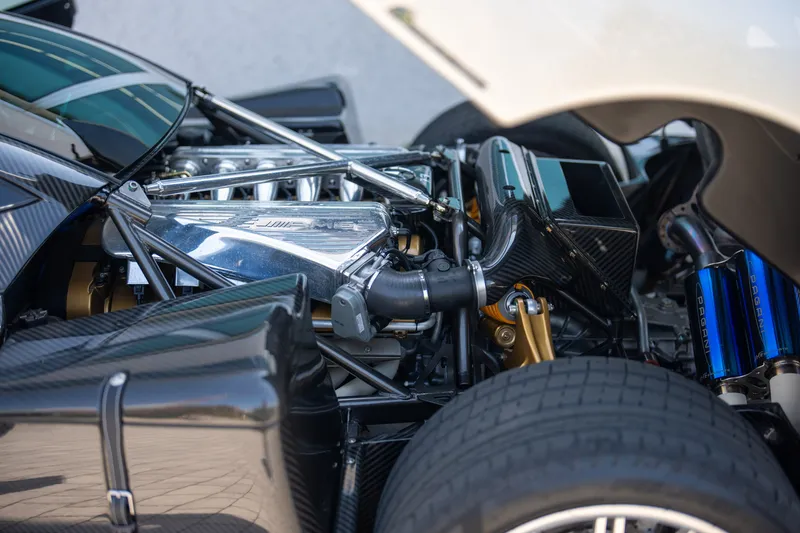
So what creates that noise? Start with the basics: natural aspiration means the engine breathes without turbochargers, so the sound is direct—no whoosh, no muffled “air mattress” effect, just intake and exhaust talking loudly. Many Zondas also lean on exotic exhaust materials (like Inconel, a heat-resistant nickel alloy used for light, durable exhausts) that add a sharper metallic edge. And when people mention ITBs (individual throttle bodies), they mean each cylinder (or small group) gets its own throttle path—one sentence translation: it makes throttle response ridiculously crisp and the intake sound extra angry.
A Zonda doesn’t “rev.” It <em>unleashes</em>—like someone opened a cathedral organ made of titanium.
— Every car nerd, eventually
The result is a sound that’s weirdly layered: low-end thunder at idle, a sharp bark on a quick blip, and then the main event—an escalating, high-pitched wail that feels like it’s tearing clean air into ribbons. It’s not the smooth, syrupy V12 of an old luxury barge; it’s more mechanical, more urgent, with little crackles and snaps on overrun that make tunnels feel like they were invented specifically for Italian hypercars.
S vs F: Same DNA, Different Flavors
If you’ve heard people argue “Zonda S or Zonda F?” like it’s a life philosophy, here’s the quick vibe check. The Zonda S is where the Zonda really starts to feel like the icon we picture today—more power, more attitude, and a sharper overall edge compared to the earliest cars. Then the Zonda F (often linked to “Fangio,” honoring Juan Manuel Fangio) is the big evolution: more aero confidence, more detail, and a version of that AMG V12 that feels even more awake. The family resemblance is obvious, but the F looks like it went to finishing school and then immediately started doing push-ups.
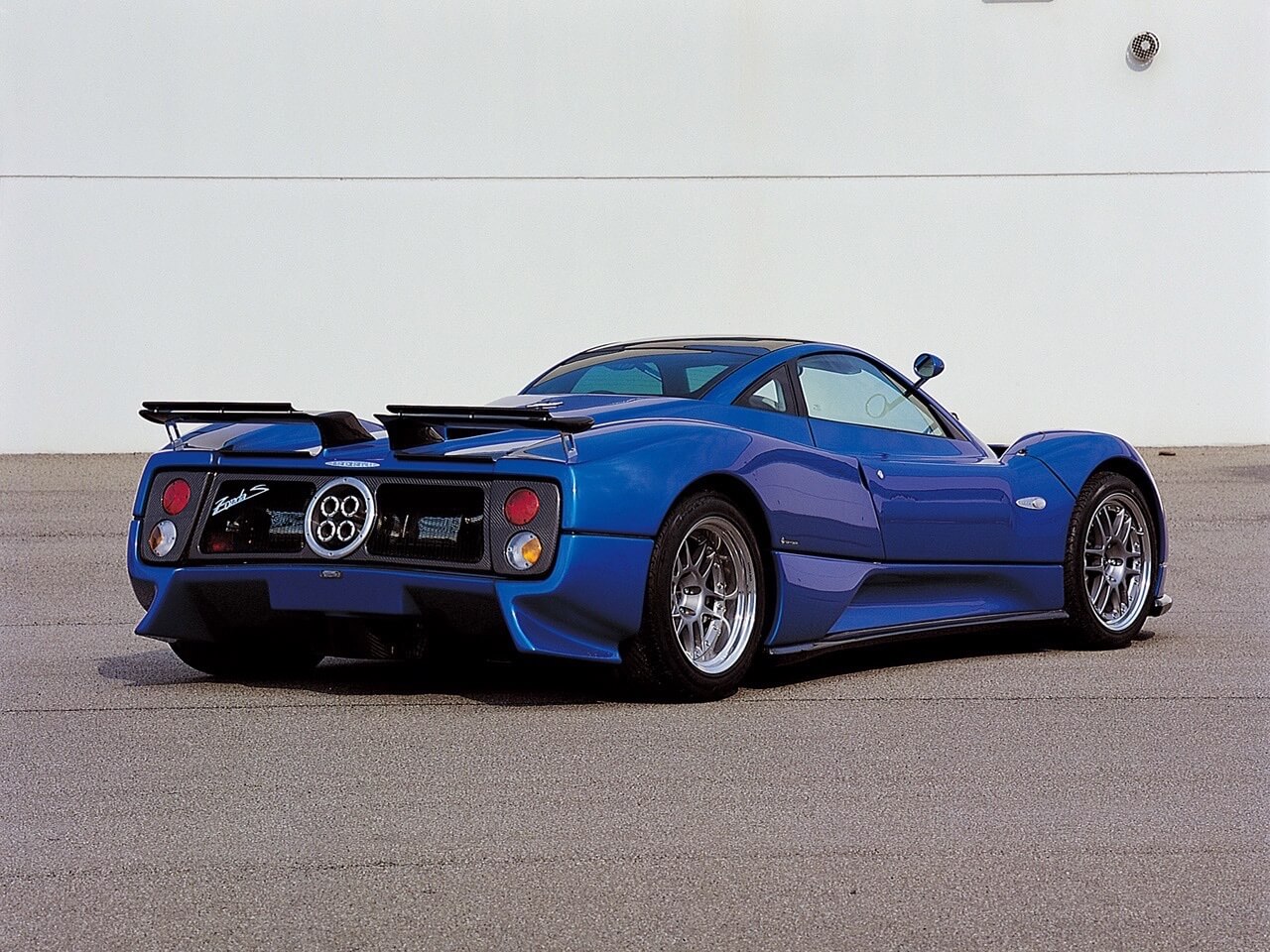
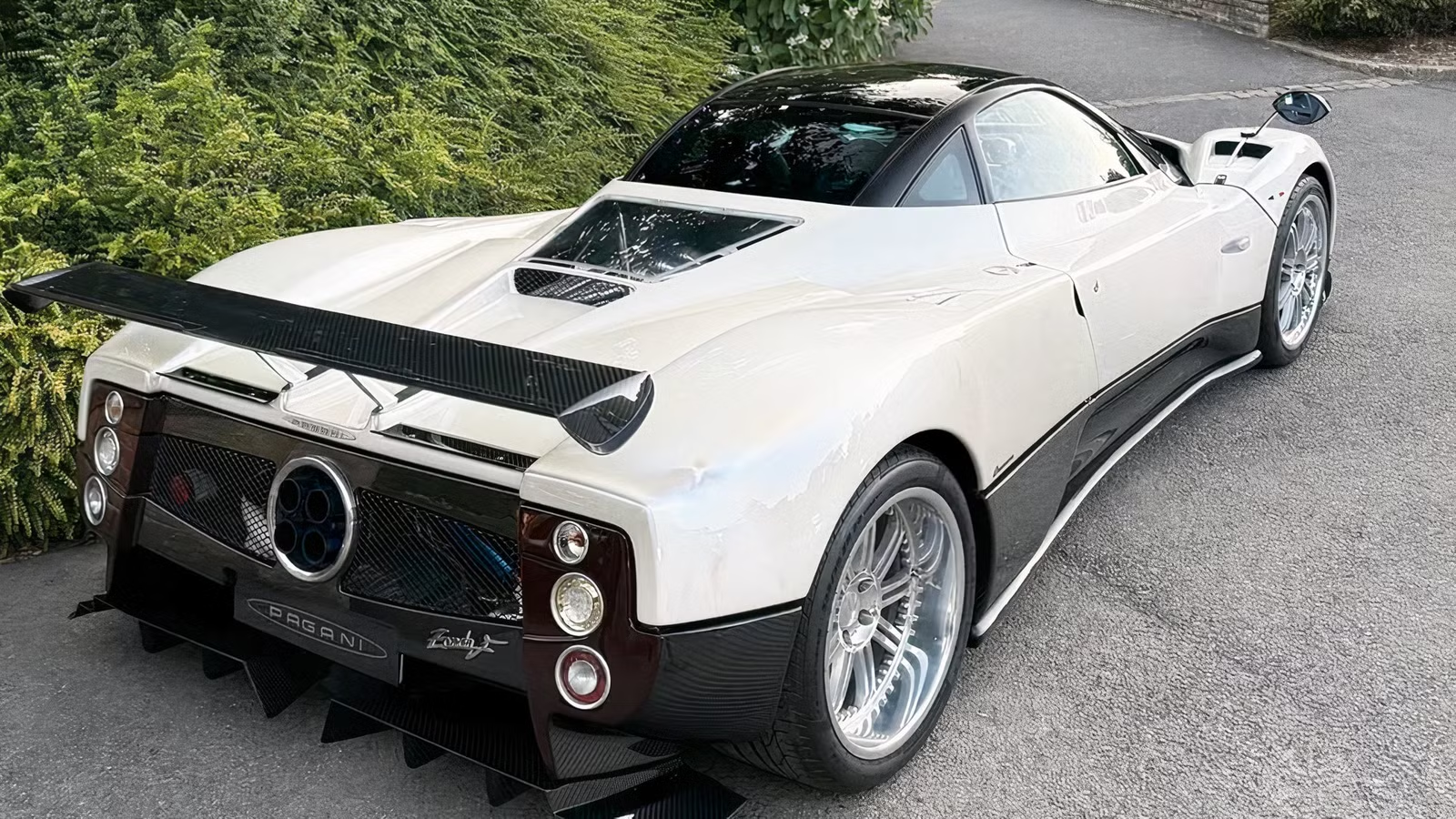
Spot the differences and you’ll start seeing them everywhere: the F tends to look more “resolved,” with revised aero pieces and lighting details that make it feel newer, while the S has that slightly rawer early-2000s supercar drama. Either way, both versions keep the Zonda’s core calling cards: exposed carbon, jet-fighter posture, and a soundtrack that can bully your phone’s microphone into surrender.
Pop Culture & Car-Nerd Lore
The Zonda didn’t just live in magazines—it lived in everywhere car people hang out. It became a Top Gear-era icon because it was the perfect TV car: outrageous design, outrageous price, outrageous noise, and a sense that it was assembled by an artist who got bored of being subtle. It also cemented itself in the gaming hall of fame—if you grew up running laps in Gran Turismo or chasing lap times in modern racers, there’s a good chance the Zonda was one of your first “wait… this exists?” cars.
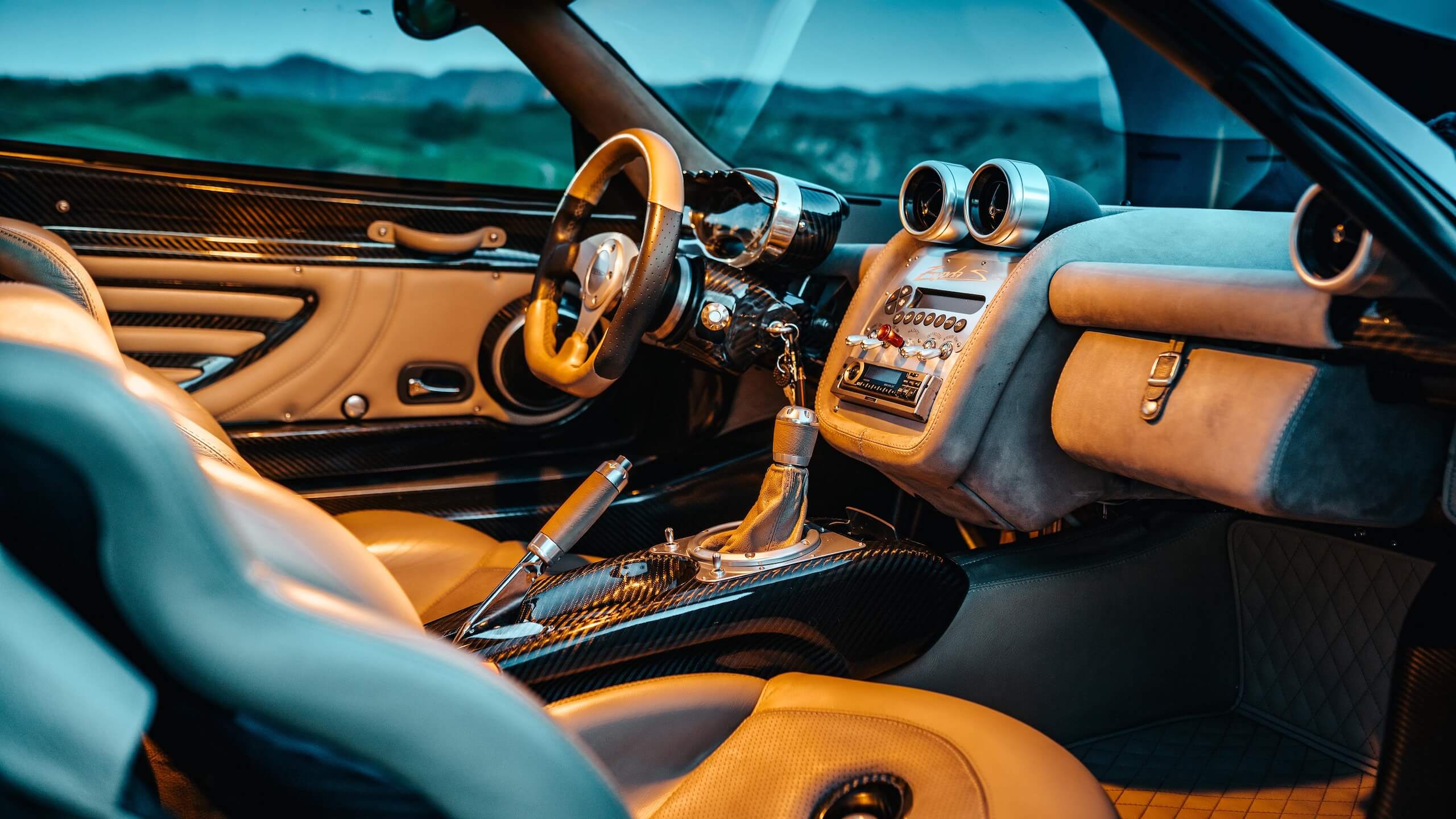
- The “tunnel meme” effect: If a Zonda appears near a tunnel, the driver is morally obligated to downshift. This is not law, but it might as well be.
- Top Gear legend energy: The Zonda became shorthand for “hand-built madness,” the kind of car presenters described like it was barely domesticated.
- Video game rite of passage: Unlocking or buying a Zonda in a racing game felt like graduating from supercars to hypercars—suddenly the handling got twitchier and the sound got louder than your TV speakers were prepared for.
Spotter’s Guide
Need to identify a Zonda in two seconds—on the street, in a photo dump, or in a DailyCarQuiz argument thread? Here’s your quick cheat sheet.
- Rear exhaust: four tips in a tight square, centered and high. If you see that, you’re basically done.
- Taillights: four round lamps across the rear—clean, symmetrical, instantly “Pagani.”
- Silhouette: cab-forward canopy, short nose, wide hips, and often a roof scoop that looks like it belongs on a race car.
- Materials: exposed carbon fiber and visible weave are common; it rarely looks “painted and normal.”
- Sound at idle: deep, heavy V12 throb—less smooth luxury, more “there’s a storm behind you.”
- Sound on throttle: a sharp bark turning into a metallic V12 scream as revs climb; no turbo whoosh, just raw airflow.
- Blips & downshifts: quick, crisp throttle response and snappy overrun crackles—especially near walls and tunnels.
- Variant clue: if it looks slightly more modern and aero-refined, you might be looking at a Zonda F; if it feels a touch earlier and rawer, it could be the Zonda S vibe.
The Zonda is a car that’s instantly recognizable in silhouette, instantly recognizable in sound, and endlessly remixed across variants without ever losing the core identity. That’s exactly the kind of icon that rewards a sharp eye—those tiny aero tweaks, the signature rear layout, the “oh, that V12” audio fingerprint.
Ready to test your spotter skills? Go play cardle on DailyCarQuiz and see if you can catch a Zonda from a single frame before your brain even finishes saying “quad exhaust.”