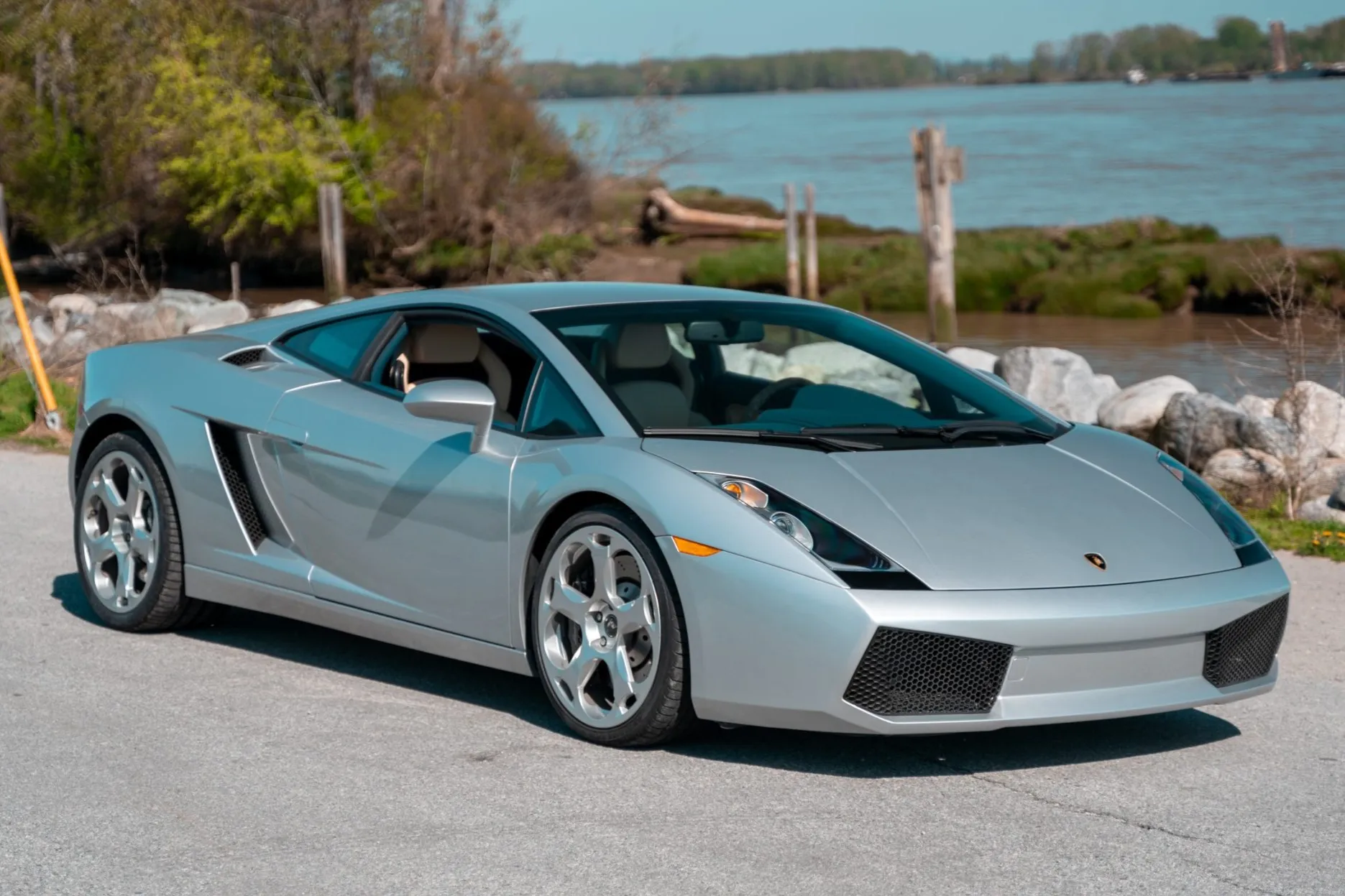
The Lamborghini Gallardo is the “baby Lambo” that accidentally became the main character. It’s the car that put Lamborghini on posters, in racing games, and in the collective car-nerd brain as the mid-2000s V10 icon. But here’s the fun part: there are basically two Gallardos hiding under one name—the 5.0L era and the 5.2L era—and the differences aren’t just numbers on a brochure.
If you play DailyCarQuiz games, this is prime trivia fuel. The 5.0 and 5.2 cars look different, feel different, and (most importantly) sound different. Once you learn the tells, you’ll start calling them correctly from a blurry rear three-quarter photo like you’re reading the Matrix.
The quick history: when 5.0 became 5.2
The early Gallardos (2003–2008) use a 5.0L (4961cc) V10. Then, with the big 2008 facelift—most famously the LP560-4—the car switches to a 5.2L (5204cc) V10 and brings a bunch of changes along for the ride: more power, different fueling tech, different exhaust rhythm, and a noticeably updated look.
GALLARDO 5.0 (2003–2008)
- Displacement: 4961cc
- Output (common): ~500–520 PS (some variants higher)
- Character: punchy midrange, classic early-2000s exotic V10 wail
- Engine note: even-firing pulse pattern

GALLARDO 5.2 (2008–2013, facelift era)
- Displacement: 5204cc
- Output (LP560-4 baseline): 560 PS / 540 Nm
- Tech: direct fuel injection (IDS/FSI-style)
- Character: harder-edged, more urgent top-end + more modern calibration
- Engine note: odd-firing pulse pattern
How to spot 5.0 vs 5.2 in one glance (design tells)
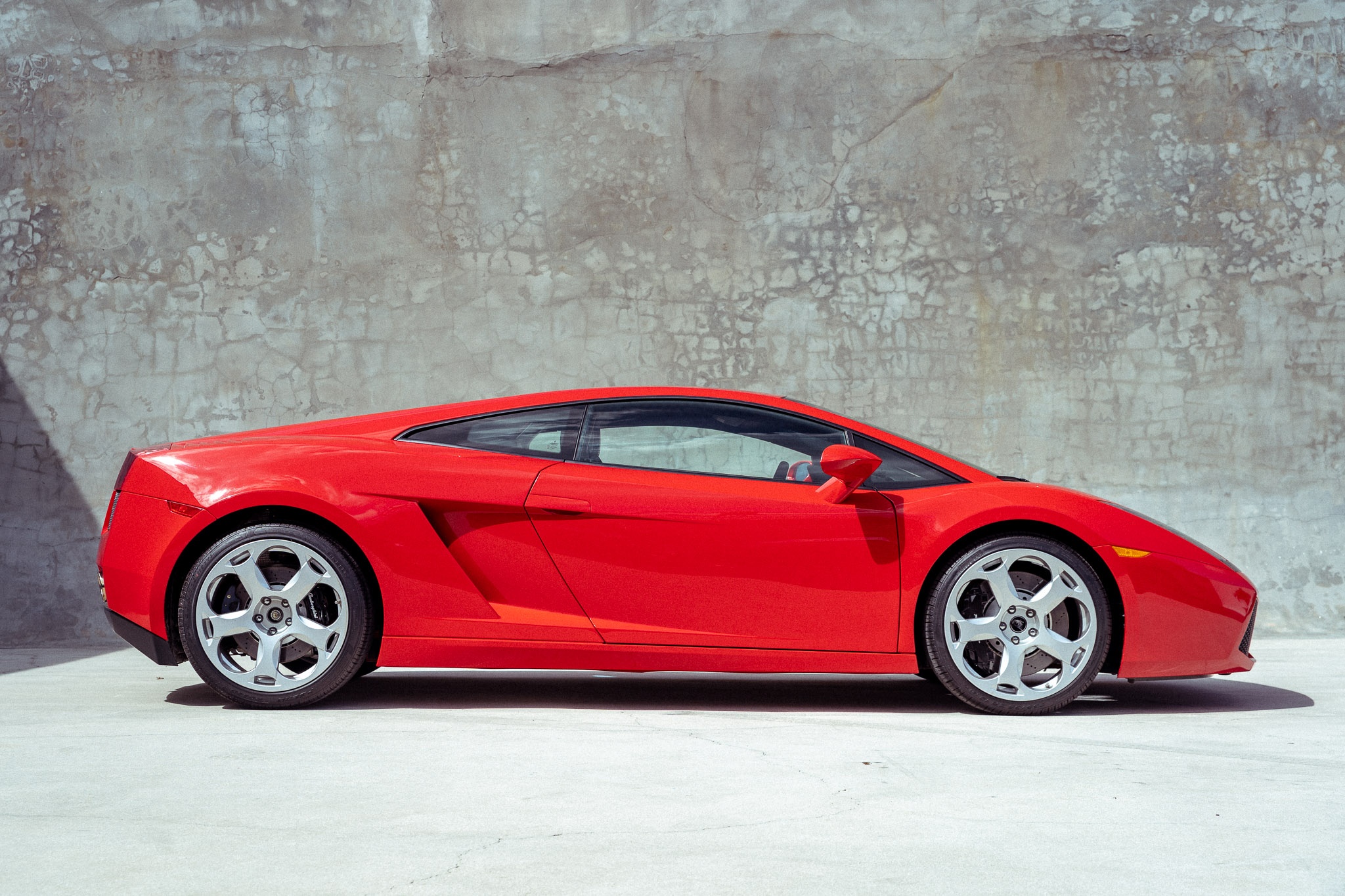
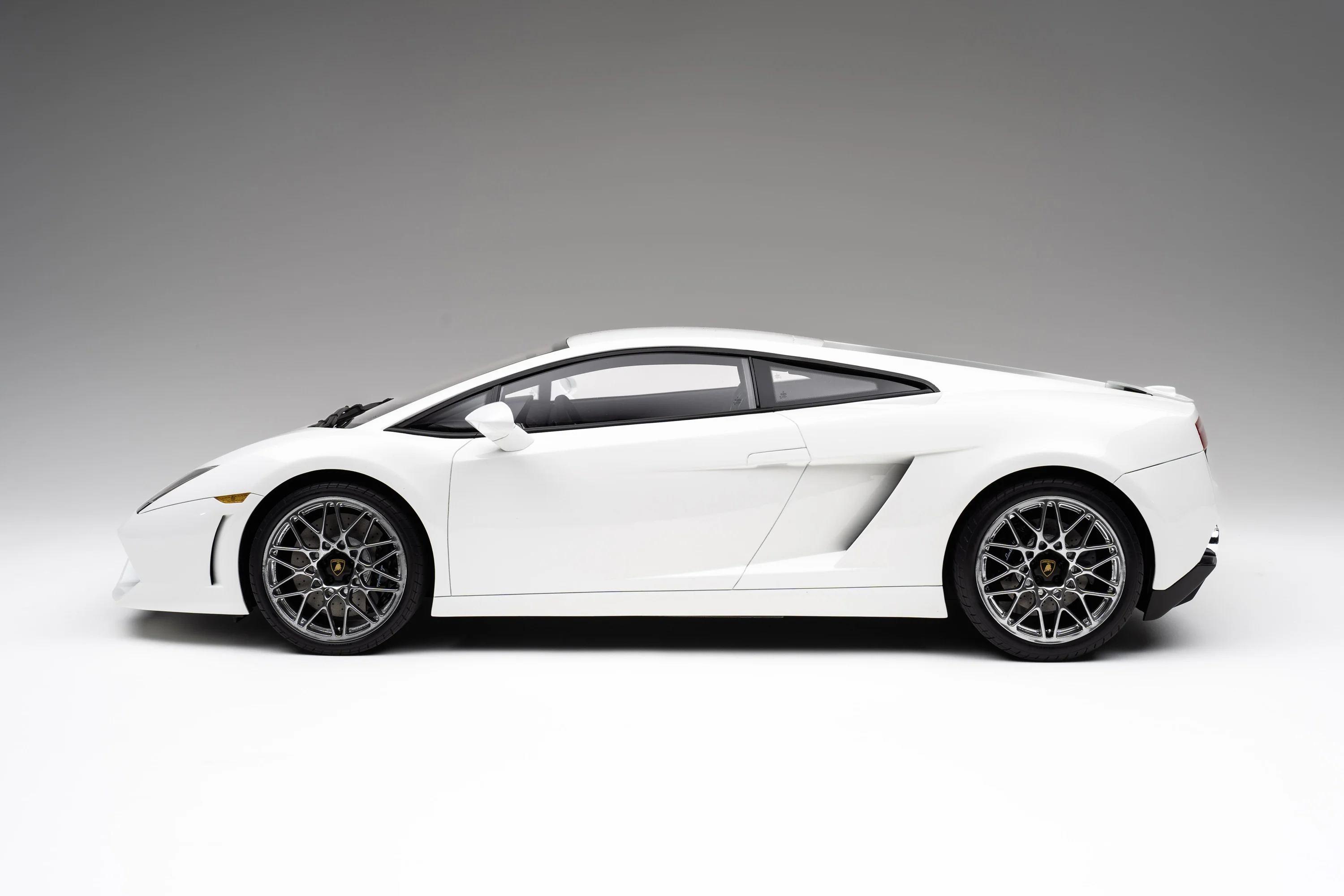
In practice, the easiest way to identify a 5.0 vs a 5.2 Gallardo is this: the 5.2 arrives with the facelift look. That facelift is more angular, more geometric, and more “late-2000s Lamborghini” than the smoother, earlier 5.0 styling.
5.0 era (pre-facelift) visual cues
- Softer front bumper shapes and a generally rounder, simpler face.
- Earlier headlight design that feels more “first-gen 2000s supercar” than razor-edged.
- Overall surfacing is smoother: fewer sharp creases, less origami.
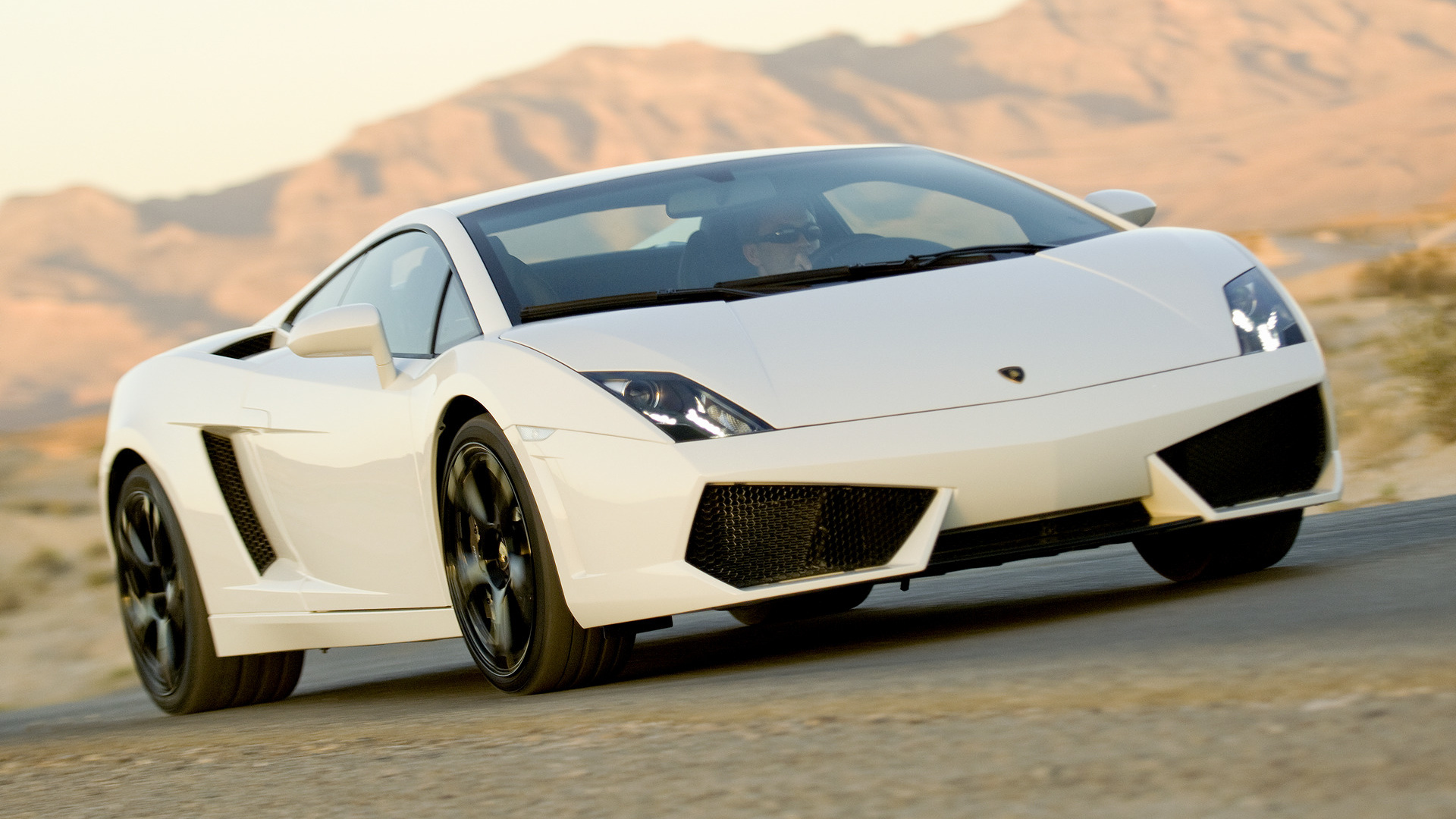
5.2 era (facelift) visual cues
- More triangular/trapezoidal intake shapes up front—looks more like it’s been cut with a scalpel.
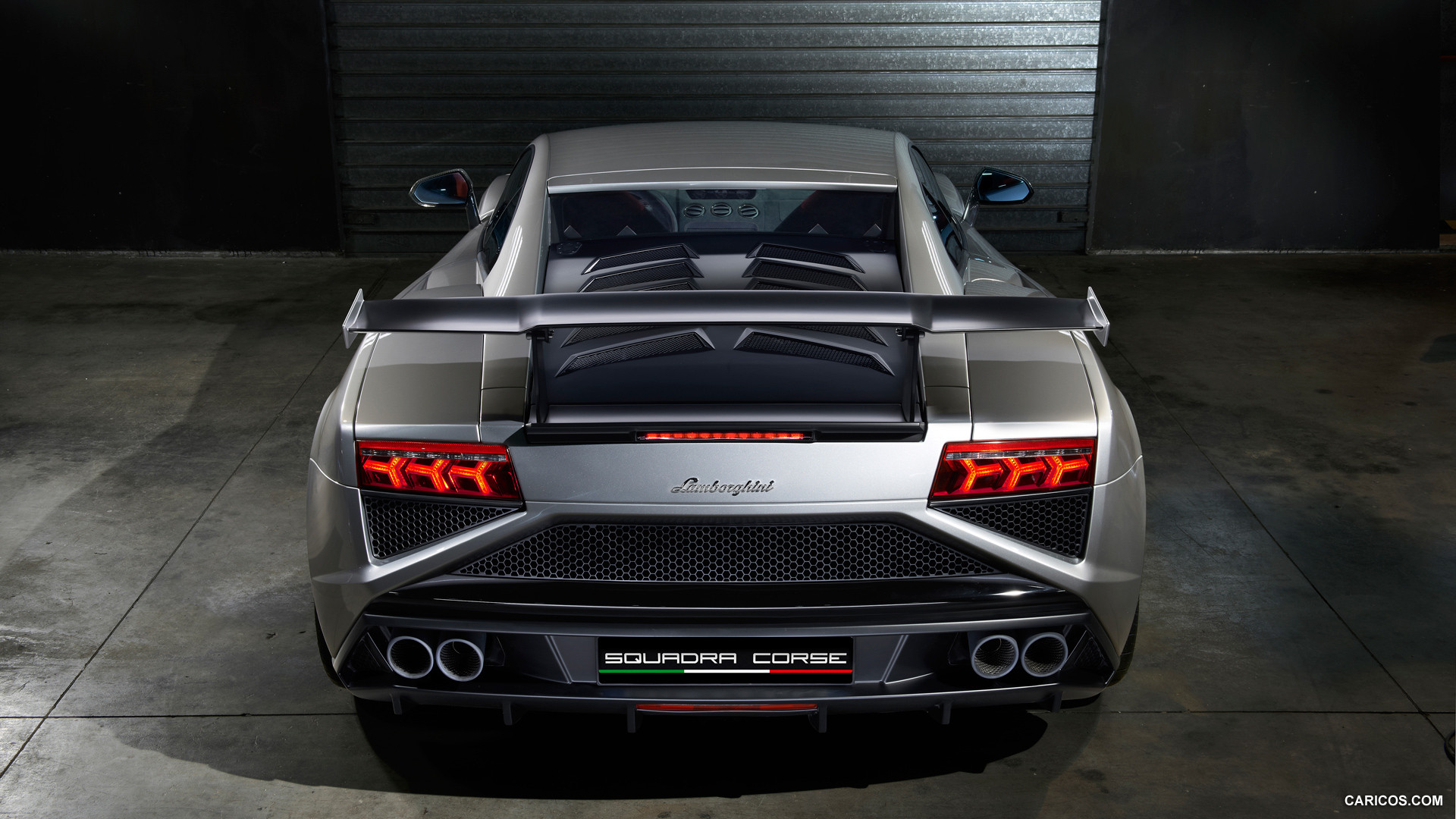
- Updated rear design with a more modern, technical look.
- Badging giveaways: LP560-4, LP570-4, LP550-2, etc.—many of the famous 5.2 variants wear their homework on the trunk.
DailyCarQuiz tip: if the Gallardo looks a little more “Murciélago-meets-Reventón” in the shapes, you’re usually looking at the 5.2 facelift family. If it looks smoother and more classic-2003, you’re likely in 5.0 territory.
The engine difference that actually matters: how they breathe
On paper, 5.0 to 5.2 sounds like a simple displacement bump. In reality, it’s a personality shift. The 5.2 introduces direct fuel injection (fuel sprayed directly into the cylinder rather than into the intake port). One-sentence translation: it can improve efficiency and response, and it often makes the engine feel a bit more crisp and modern at the same time.
Power jumps are real too. Early cars are commonly around the 500–520 PS neighborhood (depending on year/variant), while the facelift LP560-4 baseline is 560 PS. But the bigger “feel” change is where the engine seems happiest: the 5.2 tends to feel more urgent as you chase the top end, while the 5.0 has that classic, slightly smoother early Gallardo character.
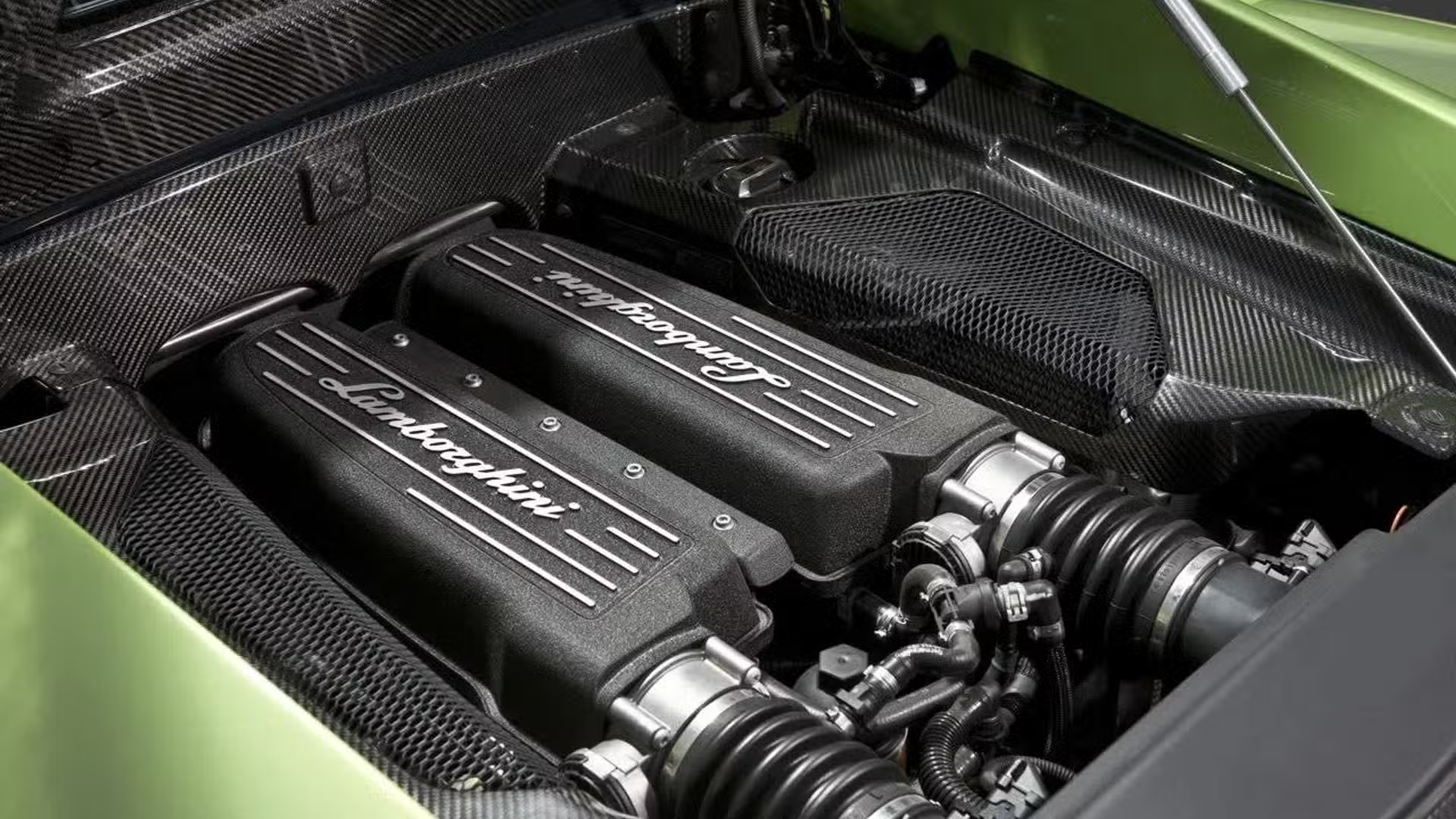
The sound difference: even-firing vs odd-firing (and why you can hear it)
Here’s the nerdy-but-fun bit: the early 5.0 Gallardo V10 is commonly described as even-firing, while the later 5.2 is odd-firing. That’s about how evenly spaced the exhaust pulses are. One-sentence translation: the rhythm of the “bang-bang-bang” coming out of the cylinders changes, and that can change the engine’s overall tone and texture.
5.0 sound (the classic Gallardo wail): smoother, more continuous, and very “early-2000s Italian exotic” in the way it climbs—like a clean, rising siren.
5.2 sound (the facelift bite): still a screaming V10, but often perceived as a touch more complex and aggressive—more edge, more urgency, and a slightly different cadence when you listen to it blipping or pulling through gears.
If the 5.0 Gallardo sounds like a perfectly tuned instrument, the 5.2 sounds like the same instrument played louder, faster, and a little angrier.
Important note for trivia mode: exhaust setup, cats, mufflers, and even recording location can change what you hear in clips. But if you’re playing RevQuiz and a Gallardo clip feels a little smoother and “classic,” lean 5.0. If it feels sharper and more modern, lean 5.2—especially if the car in the image looks facelifted.
Two pieces of Gallardo trivia (because you’re here for that)
1) Top Gear loved the Gallardo era
The Gallardo wasn’t just popular—it was culturally everywhere, including the car-TV world. If you ever feel like “I’ve seen this exact car in a hundred montages,” you probably have. It became a default reference point for what a modern Lamborghini should feel and sound like.
2) It’s basically the V10 soundtrack of the gaming generation
If you grew up on racing games, the Gallardo is one of those cars you can identify by silhouette and audio alone. That’s why the 5.0 vs 5.2 split is so fun: it’s the same “Gallardo” identity, but with two distinct flavors—like the same song remastered with a different mix.
Spotter’s guide: 5.0 vs 5.2 in 10 seconds
- Front bumper: smoother/rounder usually = 5.0 era; sharper/triangular usually = 5.2 facelift.
- Overall vibe: “early-2000s clean wedge” = 5.0; “late-2000s angular aggression” = 5.2.
- Badge clues: LP560-4 and many later LP variants are firmly 5.2 territory.
- Sound clue: 5.0 tends to feel smoother and more continuous; 5.2 often feels sharper and more urgent.
- Trivia cheat: if someone says “LP560,” your brain should immediately say “5.2 + facelift.”
This is exactly the kind of difference that wins games. The Gallardo is common enough in car culture that it shows up everywhere, but the 5.0 vs 5.2 split is the edge—spot the facelift geometry, hear the slightly different V10 cadence, and suddenly you’re not guessing “Gallardo”… you’re guessing the right Gallardo.
Want to test your ears? Queue up RevQuiz and see if you can call the generation by sound alone. If you can, you’re officially dangerous in any car trivia group chat.