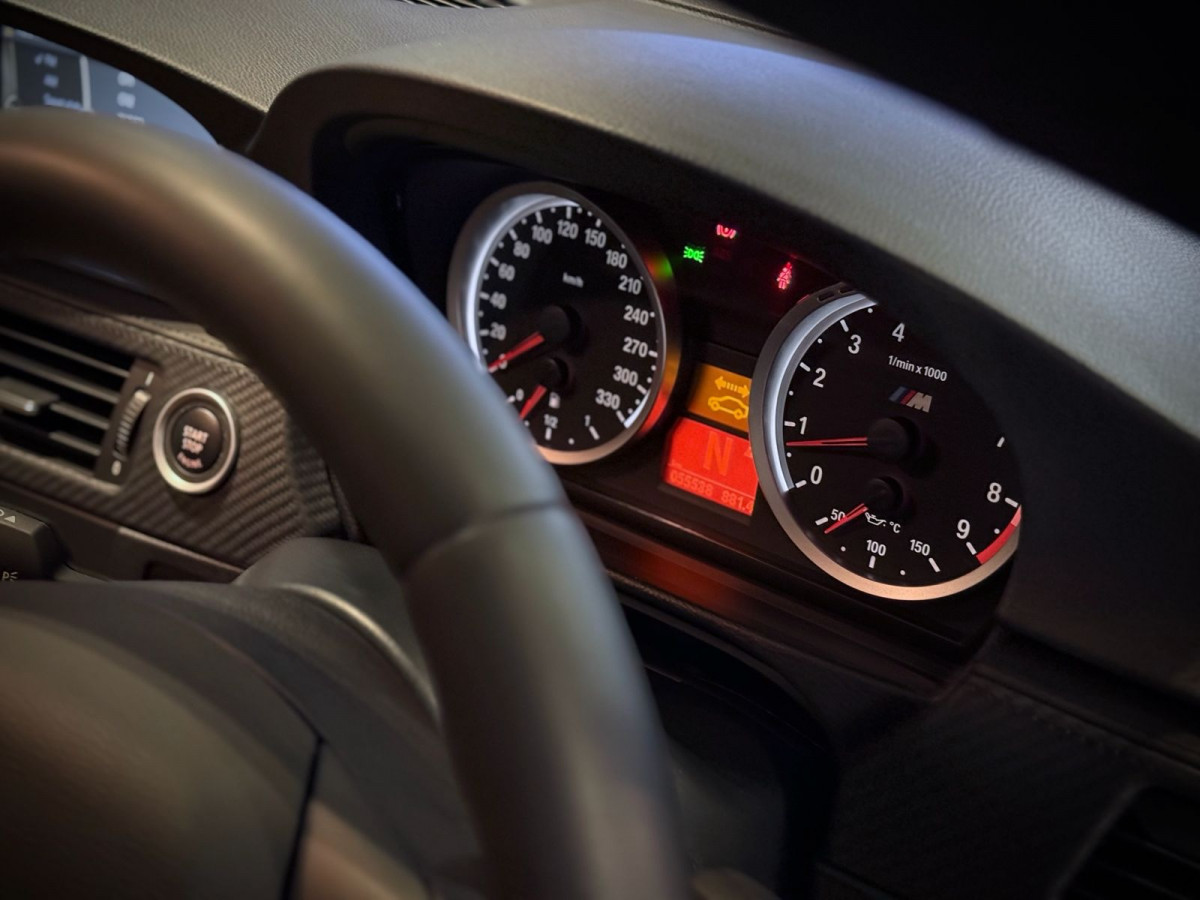
Some cars announce themselves with torque. The E9X BMW M3 announces itself with a scream—a high, metallic V8 wail that climbs and climbs until you’re suddenly looking down at an 8,000+ rpm tach like it’s the most normal thing in the world. Pair that soundtrack with a wide-shouldered 3 Series body (power-dome hood, flared arches, quad pipes), and you’ve got one of the easiest modern M cars to spot—even if you only catch it for two seconds in your mirror.
Why it’s instantly identifiable
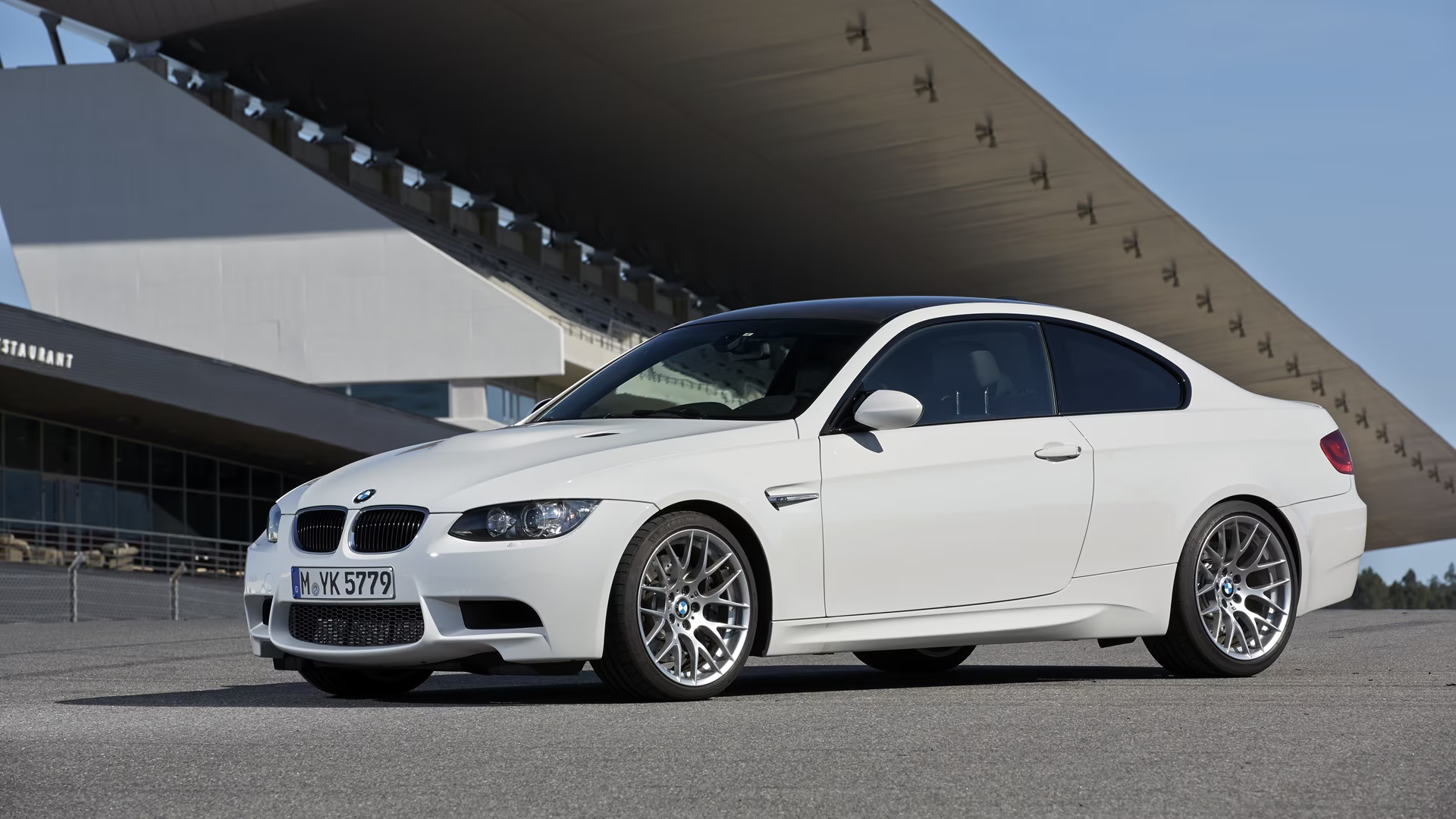
BMW did something sneaky with the E9X M3: it’s still clearly a 3 Series, but every key surface looks like it spent six months in the gym. The hood gets an aggressive power dome (that raised center section) that reads like a warning label. The wheelarches are subtly flared so the car looks planted even at a standstill. And then you notice the details that basically scream “M3”: the little side gill with the M3 badge, the M mirrors, and the stance that sits just a bit more “ready to pounce” than a normal E90/E92.
Around back, the giveaway is even simpler: quad exhaust tips—and on the E9X they sit with a tight, purposeful spacing that looks like it was designed to punch holes in the air. If you’re looking at an E92 coupe, add one more iconic cue: the carbon-fiber roof panel. It’s both a flex and a function—lowering weight up high—and it’s one of those nerdy details that makes owners quietly proud at gas stations.
Pre-LCI vs post-LCI: the facelift tells
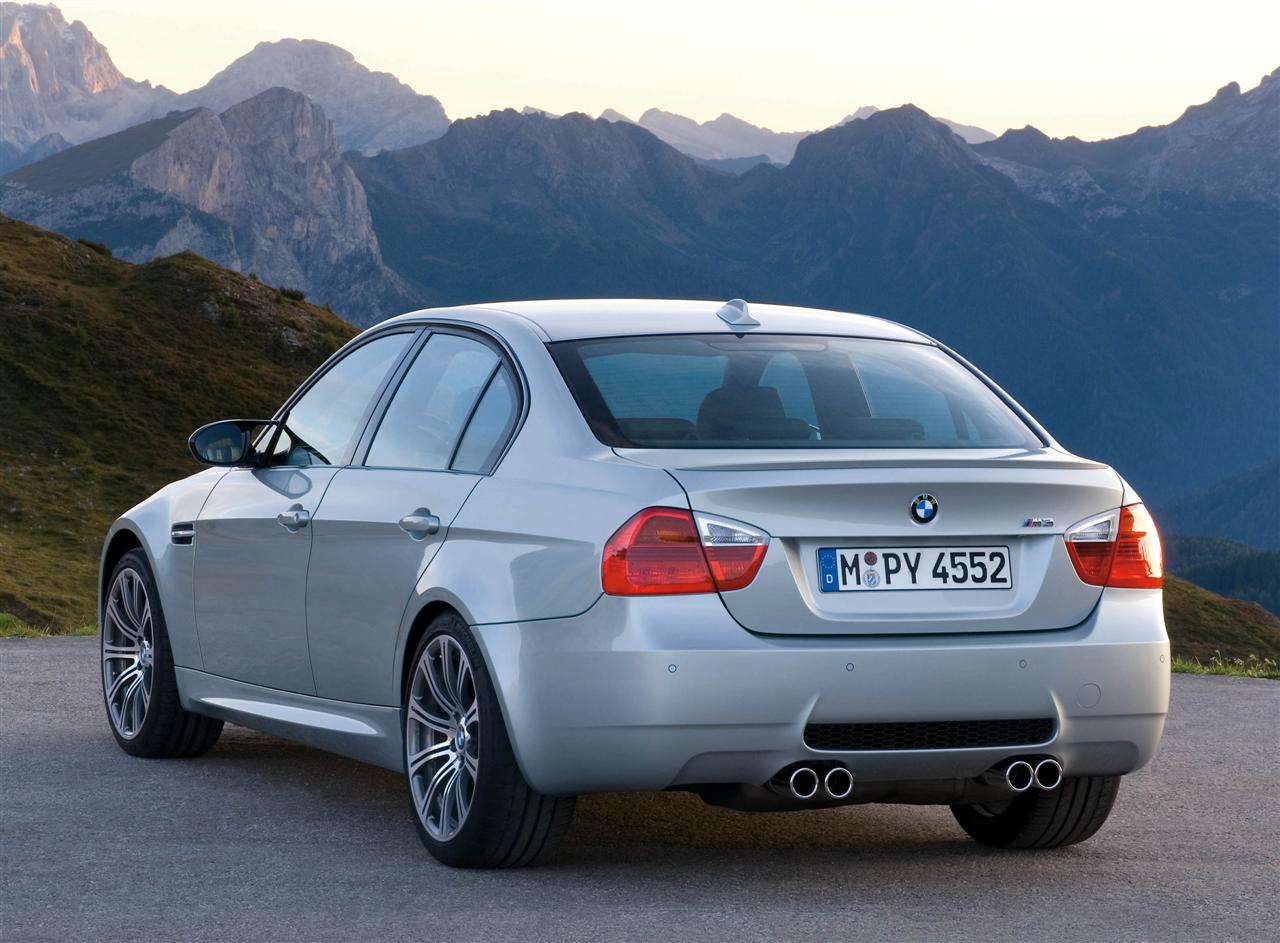
BMW calls a facelift an LCI (Life Cycle Impulse—peak BMW terminology). The E9X M3’s LCI changes are the kind car nerds love: subtle, specific, and weirdly satisfying once you learn them. The biggest thing to remember is that sedans (E90) were refreshed earlier than coupes/convertibles (E92/E93), so "pre" and "post" can depend on body style.
The easiest spot: the lights
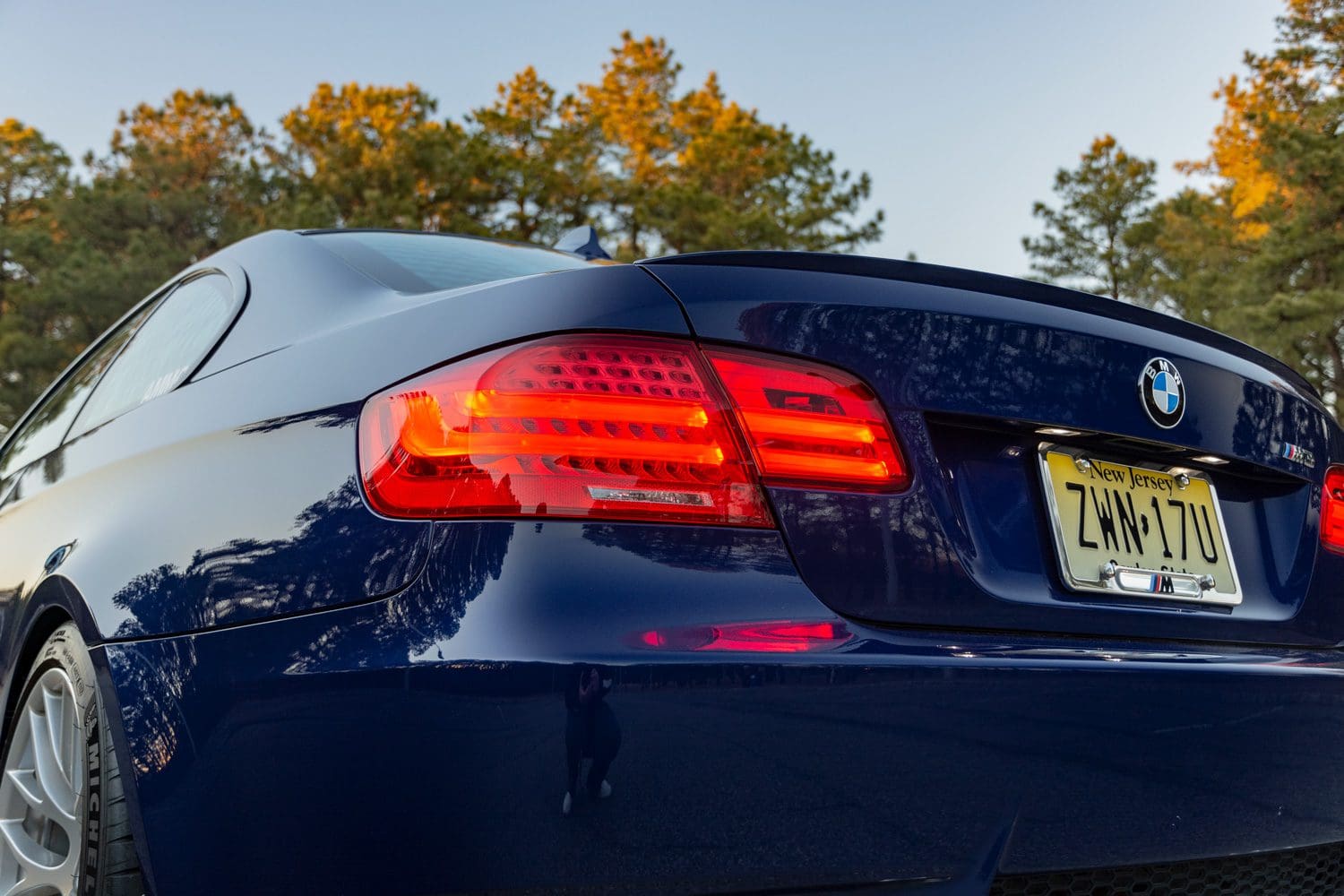
For the coupe/convertible refresh, BMW leaned hard into a modern night signature: LED corona rings up front, and more distinctive LED taillight shapes that look cleaner and more “3D” when lit. If you’re trying to clock it quickly at dusk, the post-LCI cars tend to look more crisp and modern—especially from the rear, where the lighting graphic is the tell your brain recognizes before you even know why.
Beyond lighting, LCI-era cars often coincide with small tech and trim updates (the kind you notice more from the driver’s seat than the sidewalk). The important bit for spotting is simple: post-LCI = newer-looking lighting signatures; pre-LCI = earlier, more traditional lamp shapes. If you want to be the annoying friend at the meet, this is your moment.
The signature sound: why the S65 V8 screams
Under that power-dome hood is the reason the E9X M3 has such a cult following: BMW M’s S65, a naturally aspirated 4.0-liter V8 that makes its power the old-school way—revving its face off. Peak power lives way up high, and the engine is happy to spin to an 8,400 rpm limit. That’s why the car feels a little “polite” if you short-shift it… and totally unhinged if you let it breathe.
Here’s the part that surprises people who grew up on big-torque V8 stereotypes: the E9X M3 doesn’t win by bench-pressing the pavement. It makes relatively modest torque for a V8, so to get the party started you have to rev it. That’s exactly why the sound is so addicting—the note sharpens as it climbs, turning into a high-pitch motorsport howl that feels more touring-car than muscle car.
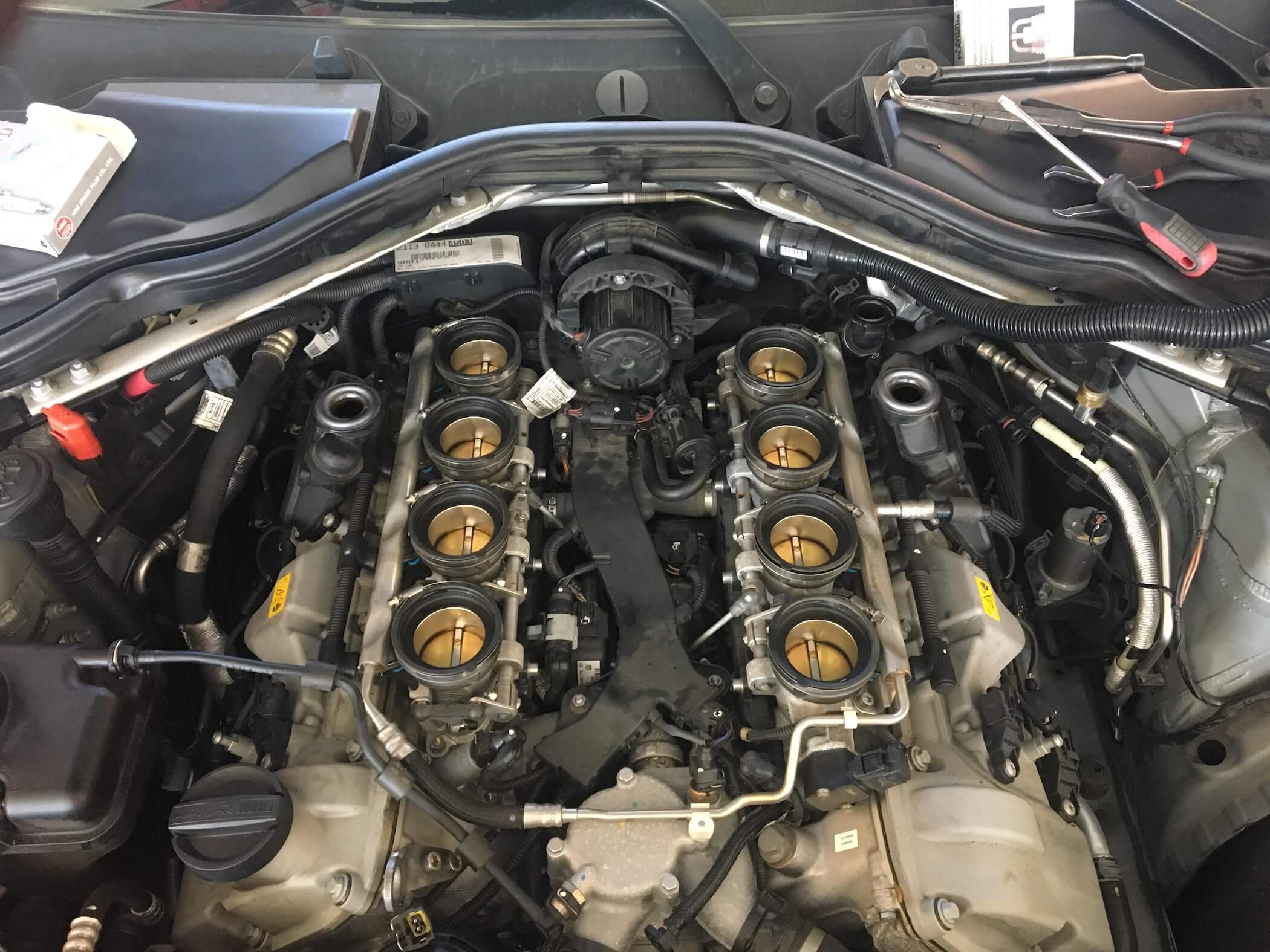
A huge ingredient is the intake setup: the S65 uses individual throttle bodies (ITBs). That means each cylinder has its own throttle plate, so airflow control happens closer to the engine—resulting in snappier response and a more “connected” feel when you crack the throttle. Add BMW’s variable valve timing (double VANOS—variable cam timing on both intake and exhaust), and the whole engine feels engineered around one goal: instant reaction + high-rpm fireworks.
Drive it like a normal V8 and it’s fine. Drive it like BMW intended—north of 6,000 rpm—and it turns into a different animal.
How it compares to “rumbly” V8s
If you’re coming from something like a W204 C63 AMG or a C6 Z06, the contrast is hilarious. Those cars do the classic V8 thing: big displacement, big shove, big low-end presence—more rumble, more thump, less need to chase redline. The E9X M3 is the opposite vibe: it rewards commitment, it begs for downshifts, and it pays you back with a clean, high-frequency wail that doesn’t sound like most street V8s.
Pop culture & car-nerd lore
The E9X M3 landed right in the era when every car show wanted a “German super saloon” showdown. One of the most famous matchups is M3 vs C63 vs RS4—the kind of segment where the hosts argue about noise, feel, and badge credibility… and the comments section argues about it for the next decade. If you’ve ever heard someone say “yeah but which one’s more fun,” congratulations—you’ve basically been living in that episode ever since.
And if you grew up on racing games, the E92 especially became a go-to “poster car” for the late-2000s/early-2010s vibe. It’s the car you pick when you want something that looks OEM-clean but sounds like it belongs on a pit straight. In-game and in real life, the giveaway is the same: that rising, urgent scream that keeps climbing when other V8s would’ve already taken a breath.
Spotter’s guide: how to recognize an E9X M3 fast
- Power-dome hood (raised center) that gives the front end a more aggressive “brow.”
- Flared wheelarches and a wider stance vs a normal E90/E92—subtle, but the car looks "stretched" over its wheels.
- Side gill behind the front wheel with an M3 badge (one of the quickest side-profile tells).
- Quad exhaust tips tucked in tight—if you only see the rear for a second, this is the giveaway.
- E92 coupe carbon-fiber roof (often visible as a darker panel) = peak spotter satisfaction.
- Pre-LCI vs LCI lights: later cars tend to have a sharper LED “night signature,” especially at the rear.
- Sound tell: less bassy rumble, more high-pitch metallic climb—a scream that keeps pulling past 7,000 rpm.
The E9X M3 is trivia gold because it sits at a perfect crossroads: modern enough to be instantly familiar, rare enough to be special, and loud enough (in the best way) to be unforgettable. That S65 V8 scream is one of those “you know it when you hear it” signatures—exactly the kind of thing that makes RevQuiz dangerously addictive. Go see if you can call it from a clip… and if you can, congratulations: you’ve officially been certified as an E9X spotter.